
Breast cancer is not a single disease. Different types develop and behave differently, and their treatment depends partly on the biological characteristics of the cancer cells. One important subtype is triple-negative breast cancer (TNBC), which is identified by the absence of three commonly tested cancer markers: oestrogen receptors, progesterone receptors and excess HER2 protein.
Triple-negative breast cancer can sometimes grow and spread more quickly than other breast cancer subtypes. It also has fewer treatment options involving hormone therapy or HER2-targeted medicines. However, advances in chemotherapy, immunotherapy and targeted treatments have expanded the approaches available to eligible patients.
Understanding how this subtype is diagnosed, what symptoms to recognise and how treatment is selected can help patients make informed decisions with their oncology team.
What Is Triple-Negative Breast Cancer?
Triple-negative breast cancer is an invasive type of breast cancer in which laboratory testing shows that the cancer cells are:
- Oestrogen receptor-negative (ER-negative): The cancer cells do not have significant oestrogen receptors.
- Progesterone receptor-negative (PR-negative): The cancer cells do not have significant progesterone receptors.
- HER2-negative: The cancer cells do not have an excess of the HER2 protein or HER2 gene amplification.
These three markers are routinely assessed because they help doctors classify breast cancer and identify treatments that may be effective.
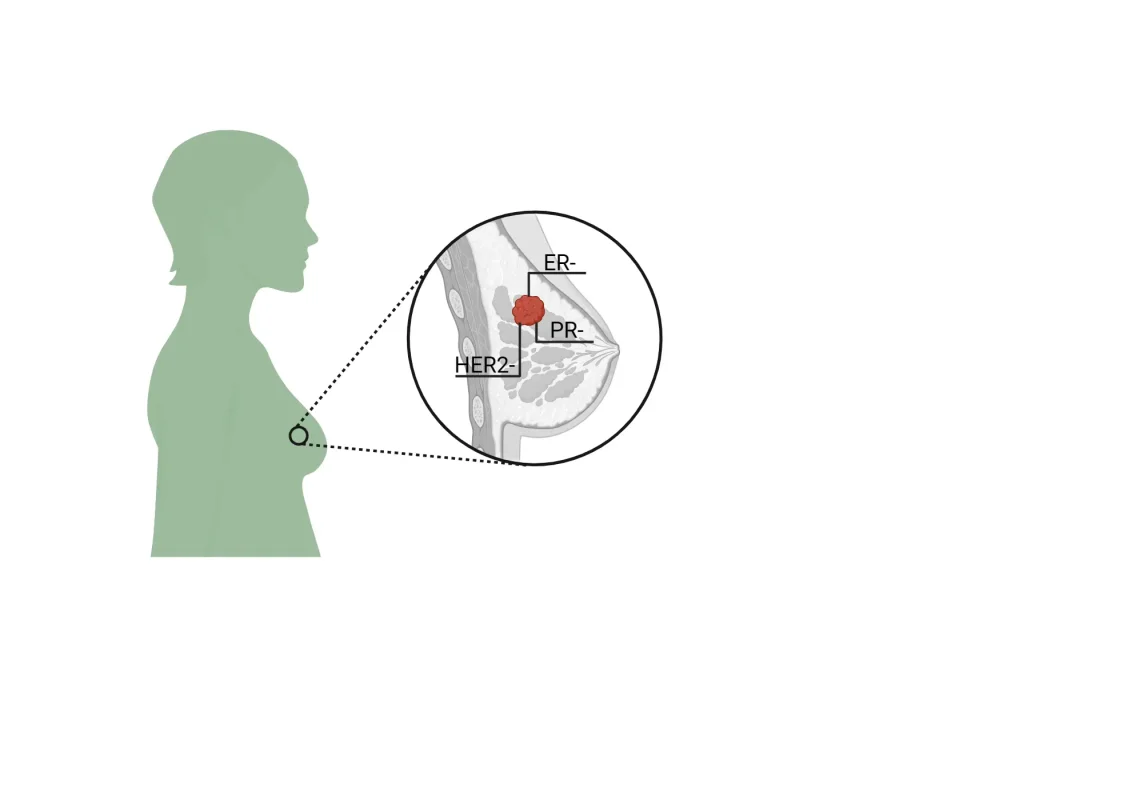
In hormone receptor-positive breast cancer, hormone therapy can help block the effects of oestrogen or progesterone on cancer cells. HER2-positive breast cancer may respond to medicines specifically designed to target HER2. Since triple-negative breast cancer lacks these treatment targets, these approaches are generally not effective for this subtype.
TNBC accounts for approximately 10% to 15% of breast cancer cases. It is often diagnosed in younger patients than some other breast cancer subtypes and is associated with certain inherited genetic mutations, particularly BRCA1 mutations.
Although TNBC can have more aggressive characteristics, its behaviour and response to treatment vary between individuals. The stage, tumour biology, genetic findings and response to initial treatment all influence the patient’s care plan.
Symptoms of Triple-Negative Breast Cancer
Triple-negative breast cancer generally causes the same symptoms as other invasive breast cancer types. Its symptoms are not usually distinguishable based on appearance or physical examination alone.
Some patients discover a breast lump, while others may have changes identified during routine breast screening.
Common signs and symptoms include:
1. A Lump in the Breast
A new lump or thickened area in the breast is one of the most common signs of breast cancer. The lump may feel firm or hard and may have an irregular shape.
However, not every breast lump is cancerous. Benign conditions such as cysts and fibroadenomas can also cause lumps, so medical assessment is important.
2. Changes in Breast Shape or Size
An unexplained change in the size, shape or appearance of one breast may require investigation. This can include visible swelling or a difference that develops over a relatively short period.
3. Changes in the Skin
Breast cancer may cause changes to the skin covering the breast, including:
- Dimpling or puckering
- Redness or unusual skin thickening
- Swelling in part or all of the breast
- An appearance similar to orange peel
These changes do not automatically indicate cancer, but they should be assessed by a healthcare professional.
4. Nipple Changes
Changes involving the nipple may include:
- New nipple inversion or pulling inward
- Unusual discharge, particularly if bloody
- Persistent irritation or changes in the surrounding skin
New or unexplained nipple changes should not be ignored.
5. Swelling in the Armpit
A lump or swelling under the arm may indicate that cancer has spread to nearby lymph nodes. However, swollen lymph nodes can also develop because of infections and other non-cancerous conditions.
Not everyone with triple-negative breast cancer experiences noticeable symptoms. Some cases are first identified through screening investigations.
What Causes Triple-Negative Breast Cancer?
The exact cause of triple-negative breast cancer is not fully understood. Like other breast cancer types, it develops when changes in the genetic material of breast cells affect the normal processes controlling cell growth and division.
These changes may occur during a person’s lifetime or be associated with inherited genetic mutations.
Certain factors are associated with a higher likelihood of developing TNBC:
Inherited BRCA1 mutations: Changes in the BRCA1 gene can increase the risk of breast cancer, particularly triple-negative breast cancer. BRCA2 and other inherited mutations may also be relevant to breast cancer risk.
Age: TNBC is more commonly diagnosed in younger women than some other breast cancer subtypes, although it can occur at any age.
Family history: A family history of breast or ovarian cancer may indicate an inherited predisposition, particularly when relatives were diagnosed at younger ages or multiple family members were affected.
Previous breast cancer history: A personal history of breast cancer may be relevant when assessing the risk of another breast cancer diagnosis.
Having one or more risk factors does not mean a person will necessarily develop triple-negative breast cancer. Similarly, the disease can occur in people without any recognised risk factors.
How Is Triple-Negative Breast Cancer Diagnosed?
Diagnosing triple-negative breast cancer involves confirming the presence of cancer, assessing its extent and identifying the biomarkers that determine its subtype.
The process usually includes clinical assessment, imaging, biopsy and laboratory testing.
Clinical Examination and Medical History
The doctor begins by reviewing the patient’s symptoms, personal medical history and family history of breast or ovarian cancer.
A clinical breast examination may be performed to assess lumps, changes in breast tissue, skin abnormalities and nearby lymph nodes.
Breast Imaging
Imaging investigations help identify suspicious areas and determine whether a biopsy is necessary.
Common investigations include:
- Mammography: Uses low-dose X-rays to identify abnormal areas within the breast.
- Breast ultrasound: Helps examine breast lumps and distinguish between fluid-filled cysts and solid masses.
- Breast MRI: May be recommended in selected cases to assess the extent of disease or investigate particular findings.
The appropriate imaging tests depend on the patient’s age, symptoms, examination findings and clinical circumstances.
Breast Biopsy
A biopsy is required to confirm whether a suspicious breast abnormality is cancerous.
During a core needle biopsy, a small sample of tissue is collected from the affected area using a needle. The sample is examined by a pathologist to determine the presence and characteristics of cancer cells.
Receptor and HER2 Testing
Once breast cancer is confirmed, the tissue sample is tested for oestrogen receptors, progesterone receptors and HER2.
A diagnosis of triple-negative breast cancer is made when the results establish that the tumour is ER-negative, PR-negative and HER2-negative according to accepted testing criteria.
These findings are essential because they help doctors determine which treatment approaches are appropriate.
Additional Genetic and Molecular Testing
Genetic testing may be recommended to identify inherited mutations such as BRCA1 and BRCA2. The results can influence treatment decisions and may also have implications for relatives who could share an inherited risk.
Other molecular tests may be considered depending on the stage of the disease and clinical circumstances. For example, PD-L1 testing can help identify certain patients with advanced TNBC who may benefit from immunotherapy.
Understanding the Stages of Triple-Negative Breast Cancer
Breast cancer staging describes the size of the primary tumour, whether nearby lymph nodes are involved and whether the disease has spread to distant organs.
The main stages are:
Stage 0: Abnormal cells are confined to the ducts or lobules and have not invaded surrounding breast tissue. TNBC is generally an invasive diagnosis, so this stage is not typical of the condition.
Stage I: The invasive tumour is relatively small and may have no involvement of nearby lymph nodes or only limited findings, depending on the specific stage classification.
Stage II: The tumour may be larger or may have spread to a limited number of nearby lymph nodes.
Stage III: The cancer may involve more extensive nearby lymph nodes or surrounding structures, including the chest wall or skin.
Stage IV: The cancer has spread beyond the breast and nearby lymph nodes to distant organs or tissues, such as the bones, liver, lungs or brain.
The stage helps guide treatment planning, but it is not the only factor. Tumour grade, lymph node involvement, genetic findings and the patient’s overall health are also important.
Triple-Negative Breast Cancer Treatment Options
Treatment for triple-negative breast cancer has evolved considerably. Although hormone therapy and conventional HER2-targeted medicines are not suitable for this subtype, several other approaches can be used.
The treatment plan depends on the stage of cancer, tumour size, lymph node involvement, genetic and molecular test results, previous treatments and the patient’s general health.
1. Chemotherapy
Chemotherapy is an important part of treatment for many patients with triple-negative breast cancer.
It uses medicines that damage or destroy rapidly dividing cancer cells. Depending on the clinical situation, chemotherapy may be given before or after surgery.
Common chemotherapy medicines and combinations may include taxanes, anthracyclines, cyclophosphamide and platinum-based medicines such as carboplatin.
The selection of medicines depends on the cancer stage, treatment goals and the patient’s ability to tolerate the treatment.
2. Neoadjuvant Chemotherapy
Neoadjuvant chemotherapy refers to chemotherapy given before surgery.
It is commonly considered for patients with larger tumours or stage II and III triple-negative breast cancer. The aim is to shrink the tumour, treat possible microscopic cancer cells elsewhere in the body and potentially make surgery more manageable.
After chemotherapy, doctors assess the response through clinical examination and imaging. The surgical specimen can then be examined to determine whether any invasive cancer remains.
When no residual invasive cancer is identified in the breast and sampled lymph nodes, this is called a pathological complete response. Achieving this response is associated with more favourable outcomes in TNBC, although it does not guarantee that cancer will never return.
3. Surgery
Surgery is an important part of treatment for many patients with early-stage triple-negative breast cancer.
The two main surgical approaches are:
- Breast-conserving surgery: Removes the cancer along with a margin of surrounding healthy tissue while preserving most of the breast.
- Mastectomy: Removes the entire breast containing the cancer.
The appropriate procedure depends on tumour size, its location, the extent of disease, response to treatment and the patient’s preferences.
Nearby lymph nodes may also be assessed to determine whether cancer has spread beyond the breast.
4. Radiation Therapy
Radiation therapy uses high-energy radiation to destroy cancer cells in a specific area.
It may be recommended after breast-conserving surgery and for selected patients following mastectomy. The decision depends on factors such as tumour size, lymph node involvement, surgical margins and other clinical findings.
Radiation therapy may also be used to manage certain symptoms when triple-negative breast cancer has spread to other parts of the body.
5. Immunotherapy
Immunotherapy is an important development in the treatment of selected patients with triple-negative breast cancer.
These medicines help the immune system recognise and attack cancer cells. Pembrolizumab is an immune checkpoint inhibitor that may be combined with chemotherapy in eligible patients.
For certain patients with high-risk early-stage TNBC, pembrolizumab may be given with chemotherapy before surgery and continued after surgery.
In advanced or metastatic disease, immunotherapy may also be considered when the tumour meets specific biomarker requirements, including an appropriate PD-L1 result.
Immunotherapy is not suitable for everyone. Doctors assess the cancer stage, test results, medical history and potential risks before recommending it.
6. Targeted Therapy
Targeted therapy focuses on specific biological features or molecular changes involved in cancer growth. For selected patients with HER2-negative breast cancer and inherited BRCA1 or BRCA2 mutations, medicines known as PARP inhibitors may be considered.
Examples include olaparib and talazoparib. These medicines interfere with cancer cells’ ability to repair damaged DNA. Other targeted medicines may be appropriate in advanced disease depending on previous treatment, tumour characteristics and available treatment approvals.
7. Antibody-Drug Conjugates
Antibody-drug conjugates are specialised medicines that combine an antibody with a cancer-killing drug. The antibody helps deliver the drug to cells carrying a particular target.
Sacituzumab govitecan is one example used in certain patients with advanced triple-negative breast cancer, particularly after previous treatment.
These medicines have expanded treatment possibilities for some patients whose disease has progressed after earlier therapies. Their suitability depends on the treatment setting, previous medicines and applicable clinical guidance.
Treatment for Metastatic Triple-Negative Breast Cancer
When triple-negative breast cancer spreads to distant organs, it is classified as stage IV disease. Treatment at this stage generally focuses on controlling cancer growth, managing symptoms, extending survival where possible and maintaining quality of life.
Options may include chemotherapy, immunotherapy for eligible patients, targeted medicines for certain genetic or molecular findings and antibody-drug conjugates. PD-L1 testing and inherited BRCA1 or BRCA2 testing can be particularly relevant when selecting systemic treatment.
Radiation therapy or surgery may also be considered to manage specific complications, such as painful bone lesions or symptoms caused by a tumour in the breast. Treatment decisions are reviewed over time. If the cancer progresses or stops responding to a particular medicine, the oncologist may recommend another treatment based on updated clinical findings.
Why Personalised Treatment Planning Matters
Triple-negative breast cancer does not behave exactly the same way in every patient. Even when two people have the same diagnosis, their treatment plans may differ. An oncologist considers several factors before recommending a particular approach:
- Cancer stage: Determines whether treatment is focused on early-stage disease or metastatic cancer.
- Tumour characteristics: Tumour size, grade and lymph node involvement help guide treatment decisions.
- Genetic findings: BRCA1 and BRCA2 mutations may make certain targeted medicines appropriate.
- Biomarker results: PD-L1 testing can help identify patients who may benefit from particular immunotherapy approaches.
- Previous treatment: Earlier chemotherapy, surgery or other treatments can influence subsequent choices.
- Overall health: Organ function, other medical conditions and treatment tolerance must be considered.
A multidisciplinary approach may involve medical oncologists, breast surgeons, radiation oncologists, radiologists and pathologists. Their combined expertise helps ensure that treatment decisions address the different aspects of the patient’s condition.
Follow-Up Care After Treatment
Follow-up care remains important after completing treatment for triple-negative breast cancer. The oncology team monitors the patient’s recovery, manages any ongoing side effects and assesses for signs of recurrence based on the individual’s risk and clinical history.
Follow-up may include:
- Regular medical appointments and physical examinations
- Mammography of the remaining breast tissue when appropriate
- Assessment of new or persistent symptoms
- Monitoring and management of treatment-related complications
- Additional investigations when symptoms or examination findings indicate a need
Patients should report new breast changes, persistent bone pain, unexplained weight loss or other concerning symptoms. These changes do not necessarily mean that cancer has returned, but they should be assessed appropriately. The follow-up schedule is individualized rather than identical for every patient.
Frequently Asked Questions
Is triple-negative breast cancer more aggressive than other breast cancer types?
Triple-negative breast cancer often grows and spreads more quickly than some other breast cancer subtypes. It may also have a higher risk of recurrence, particularly during the first few years after treatment. However, outcomes vary depending on the stage, tumour characteristics and response to treatment.
Can triple-negative breast cancer be cured?
Many patients with early-stage triple-negative breast cancer can be treated with the aim of achieving a cure. Treatment may involve chemotherapy, surgery, radiation therapy and immunotherapy in selected cases. The likelihood of long-term control depends on several individual factors.
Why is hormone therapy not used for triple-negative breast cancer?
Hormone therapy works by blocking hormone receptors or reducing the effects of hormones that encourage certain cancer cells to grow. Triple-negative breast cancer cells lack oestrogen and progesterone receptors, so conventional hormone therapy does not provide the expected benefit.
Does triple-negative breast cancer respond to chemotherapy?
Yes. Chemotherapy is an important treatment for triple-negative breast cancer and can be effective in both early-stage and advanced disease. The response varies between patients and depends on factors such as tumour biology, treatment regimen and disease stage.
Is immunotherapy suitable for every patient with triple-negative breast cancer?
No. Immunotherapy is considered for selected patients based on factors such as cancer stage, treatment setting, biomarker results and medical history. PD-L1 testing is particularly relevant for certain immunotherapy approaches in advanced disease.
Should patients with triple-negative breast cancer undergo genetic testing?
Genetic counselling and testing for inherited mutations, particularly BRCA1 and BRCA2, may be recommended. Identifying an inherited mutation can influence treatment decisions and help assess cancer risk among biological relatives.
Can triple-negative breast cancer return after treatment?
Yes. Like other breast cancer types, TNBC can recur after treatment. Recurrence may occur in the breast or nearby lymph nodes, or as distant disease affecting other organs. Regular follow-up helps monitor recovery and investigate concerning symptoms.
Conclusion
Triple-negative breast cancer is a distinct breast cancer subtype that requires careful diagnosis and an individualised treatment strategy. Although it does not respond to conventional hormone therapy or standard HER2-targeted medicines, chemotherapy, immunotherapy, targeted treatments and other approaches have expanded the options available to patients.
Accurate receptor testing, appropriate genetic assessment and careful evaluation of the cancer stage are essential for selecting treatment. Working with an experienced medical oncology team helps patients understand their diagnosis, consider available options and receive care suited to their individual needs.
Take the Next Step with an Expert Consultation
A diagnosis of triple-negative breast cancer can raise questions about treatment choices, genetic testing and the next steps in care. Consulting an experienced medical oncologist can help patients understand their diagnosis and make informed decisions.
Dr. Pranay Girdhari Taori, Specialist Medical Oncologist, brings more than 27 years of dedicated experience in medical oncology. His approach to cancer care involves careful assessment, evidence-based treatment planning and consideration of each patient’s individual medical needs. If you or a loved one has been diagnosed with triple-negative breast cancer, an expert consultation can help clarify the available treatment approaches and support informed decisions throughout the cancer care journey.
